Sexual Violence as a Tool of the State
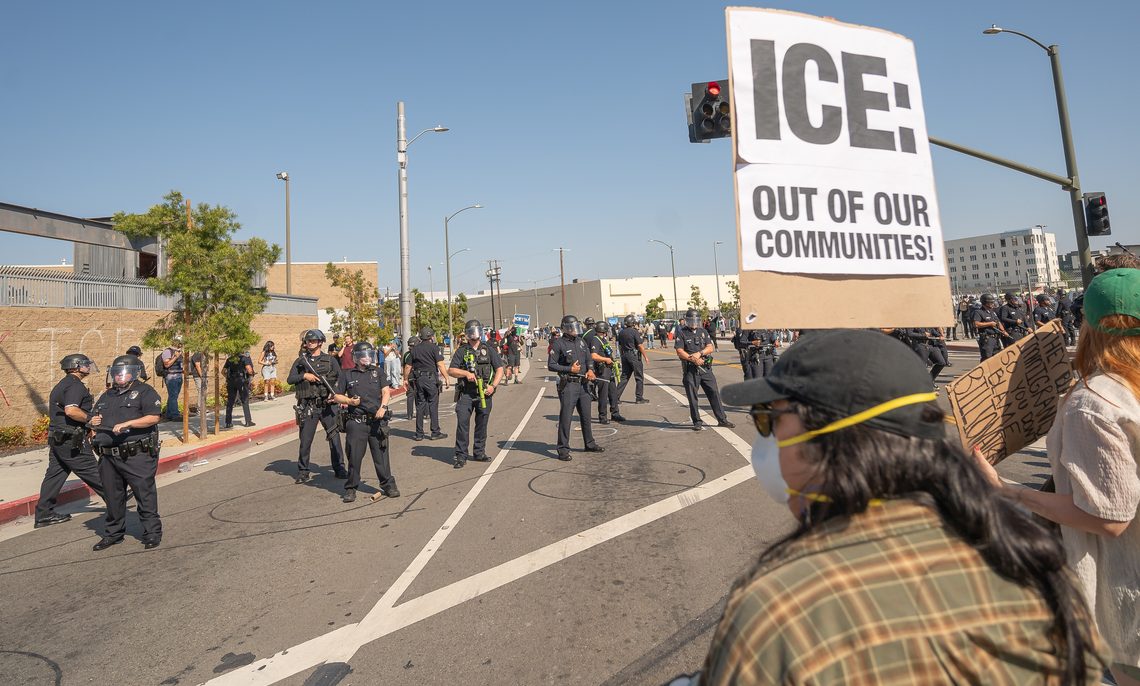
We can’t seem to escape the violence that US Immigration and Customs Enforcement (ICE) continues to commit. Whether online or in-person we have seen reports like the recent shootings of Renée Good and Lorenzo Salgado Araujo, the excessive force used against protestors, and the inhumane treatment of detainees. Instances of physical violence have been at the center of recent anti-ICE opposition, but significantly less attention has been paid to sexual violence and how legislative attempts to control it has done little to actually make a difference. That is because violence cannot be abolished from ICE when it is one of the agency’s defining components. Reform is not possible for an institution that uses sexual violence as a tool to maintain power over those categorized as “foreign enemies”.
ICE was established by the Department of Homeland Security in 2003 as a response to the 9/11 terrorist attacks. ICE, with its origins in profiling and harassing Muslim people, has expanded to kidnapping and terrorizing Latine people in this country. Its foundation was rooted in violence that continues to this day and has occurred at such a rate that additional regulations had to be enacted.
In 2014, the Prison Rape Elimination Act (PREA) regulations were extended beyond just domestic jails and prisons to include ICE facilities. The act was originally signed into law in 2003 by President George W. Bush and enforced a zero-tolerance policy for sexual assault. In 2023, the Journal of the American Medical Association published a study examining sexual assault allegations perpetrated against ICE detainees from 2018 to 2022 – four to eight years after the adoption of PREA. During that time period, 90 out of 129 facilities reported allegations with a total of 922 sexual assault allegations being reported to ICE administrators. While 272 of these allegations were reported to have been committed by facility staff, only 9 of them were ultimately substantiated – meaning the allegation was investigated and determined to have occurred.
Given that the study can only analyze data based on information provided by ICE to a third party (Nakamoto Group), we must approach the figure of nine confirmed cases with caution. While the study includes this disembodied number, it leaves out key factors, including the reporting process. This calls into question – if fear, shame and intimidation impact who and how many people report, how accurate is this number? If you are an undocumented immigrant being detained then there is an inherent power imbalance between you and ICE agents which may lead you to avoid reporting to not upset them to maintain your safety or avoid deportation. Considering this power imbalance, these reports only include allegations that were actually investigated; how many went ignored or were just tossed aside as unsubstantiated?
Let’s compare these figures to the results of a report conducted by the U.S. Government Accountability Office. An article published by the ACLU interpreted the 2013 report’s findings and called into question the thoroughness of ICE investigations as well as reporting and oversight mechanisms. The ACLU contended that ICE agents failed to report 40 percent of sexual abuse allegations to the ICE headquarters, adding that “… researchers found that only 7 percent of 215 allegations of sexual assault in immigration detention facilities from 2009 to 2013 were substantiated.” The comparison between the number of substantiated reports before PREA adoption and after doesn’t show a significant change in sexual assault reports and challenges whether the act is even helping detainees at all.
The reporting process is flawed and that means perpetrators aren’t being punished and survivors are not receiving justice. Change cannot be made if ICE isn’t giving accurate reports of the sexual violence occuring in their facilities. It has been 12 years since they have adopted the PREA regulations, but the continued occurrence of assault proves that it isn’t enough. How many more assaults have to occur in order for people to realize that a new law won’t stop predatory ICE agents from abusing their power, other agents ignoring or undermining reports, and detainees from being treated as subhuman?
ICE has a long history of violence, sexual or otherwise, and it will continue to add on to that history the longer it continues to exist. Sexual assault is still occurring even with laws and procedures put in place to try and mitigate it because the reporting process is inherently flawed and will never accurately show or punish perpetrators. Eventually it becomes a cycle of who will be policing the police (or ICE agents) and who will police them and so on. You can not fix a system that was flawed from its inception. ICE must be abolished to end violence against everyone who steps foot inside the United States.

Nova is is a non-binary Tejanx community organizer born and raised in San Antonio, TX. They find their personal calling in advocating for queer and …
More By This Author